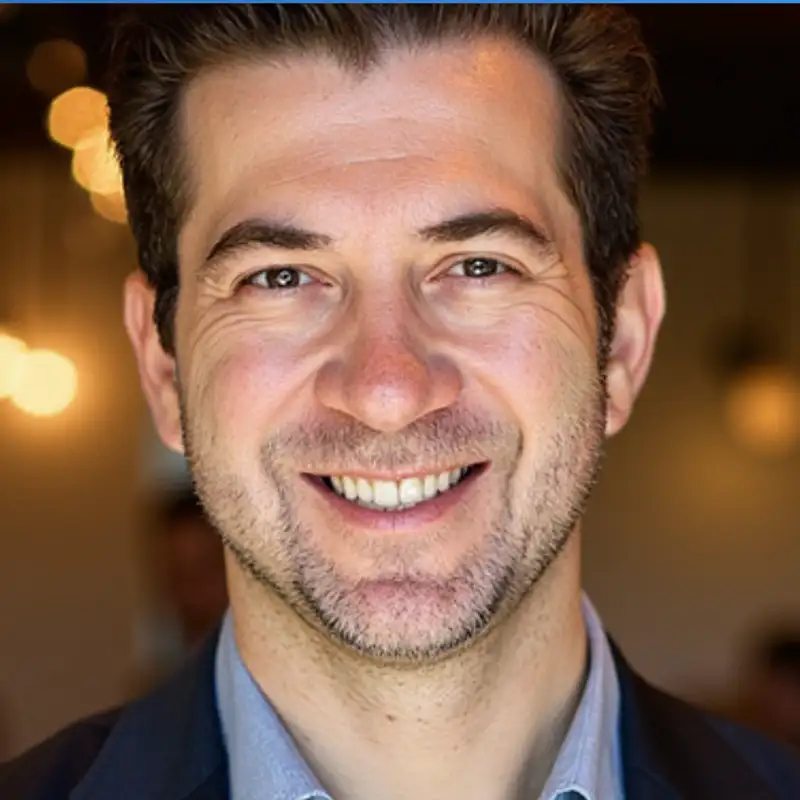
Dr Richard Oelberger on Men's Mental Health
Candice (00:00)
Hi and welcome to this week's episode of Open Wounds Podcast. Today I have a guest with me. His name is Dr. Richard Olberger. ⁓ he is a PhD in ⁓ works in men's mental health. So ⁓ welcome to the podcast, Dr. Richard.
Dr O (00:19)
Thank you very much for having me, Candace. Pleasure to be here.
Candice (00:22)
Yeah, so I yeah, glad to have you. ⁓ would you like to share with the audience a little bit about why you got into this space and what you're passionate about and what drives you to to keep working in the field you do?
Dr O (00:39)
Wow. Big question, favorite topic of mine. I mean, I feel like I g I get reborn and reinvented all the time, ⁓ in this space, which is kind of the cool thing about healing and health. And as most people figure we get into it probably with some curiosity about ourselves and our own families and our world. And as that evolves and as my life evolves, it's kind of shifted. So I think initially, I was always curious about the other kids and kindergarten and
I see that tendency within me, even as I'm out there last weekend running a men's retreat. I think there's a certain curiosity, ⁓ everything from, you know, faces to body language to differences, uniqueness amongst individuals. So that curiosity I think has inspired me and helped me go a long way into learning a lot more about the human condition, about
different places of the world people are from, different cultural background, religious, and how that shows up and in recent years even understanding the depth of trauma healing and things that get carried on between the generations and things of that nature, as well as what lights people up, what excites people. I think we can get stuck in the the painful vortices of all the experiences. ⁓ but also the curiosity about what helps people keep going, what keeps them resilient and what
Inspires them to create and be amazing in spite of everything. and what are the capacities we can learn from individuals who embody those qualities?
Candice (02:10)
Yeah.
Yeah, I think ⁓ there's a a lot that you just said in there that we could start to spring word from. So I'm trying to be like, there's a couple of things I wanted to talk about. ⁓ yeah, so I guess as you were going through your PhD program, like obviously you could have gone a lot of directions. You could have worked with kids or you could have worked in the court systems. Like there's an infinite number of ways you could use your education. What made you drawn to working
Dr O (02:24)
Sure. Break it down wherever you want to go, yeah.
Candice (02:46)
With men specifically.
Dr O (02:49)
Yeah, I mean my degree now I'm ⁓ kind of proud and also a little shocked to admit I graduated twenty years ago. So I think ⁓ even my journey through my PhD, I went from being in a clinical program to getting really involved in spirituality and consciousness. And so I took a semester off and and kind of moved in that direction towards spiritual aspects of healing and wound up finding a graduate school that'll allow me to pursue research on how people use spiritual practices and pathways for healing.
And studying a lot of the world culturals cultures to that effect. So I think that's where I was at 20 years ago, and that still remains ⁓ part of my practice. And that can kind of evolve. That that may have led me working on Skid Row, it may have led me to serving some of the disfra disenfranchised in Los Angeles. But it wasn't until you know, so that work kind of showed me, wow, here I was, bright eyed, willing to work all hours of the day and night, go alongside
Policemen, firemen, ER, emergency rooms, school, you know, violence and shootings. So initially there's an excitement to run into the burning building, and then I start to realize, what what is this feeling of burnout and compassion fatigue and constantly being in a state of kind of t keyed on and and what's happening to my nervous system and my relationships as I become a little bit more distant from myself and do I even know myself and
And what would feel good. So I think that journey, ⁓ alongside life, ⁓ I've my my father was ⁓ kind of in cognitive decline and eventually passed in 2019. And I always remark upon that because even though he was an older man and I was always prepared, even as a young boy, to know that my father was older and that the eventuality of loss would come, that once grief hit me, it was kind of an experience that there was no words for.
Candice (04:27)
Mm.
Dr O (04:44)
And where there was no real comfort that I could find in others, even going through religious practices and rituals and daily things that kind of are supposed to address grief. So I think that human experience of feeling like, wow, this is what from a man's perspective people are carrying around and the loneliness that can go along with that, even as a practitioner, that you know, doing all the right things, that there's a tremendous sadness, loneliness.
Candice (04:45)
Mm.
Mm.
Dr O (05:14)
And distance, disconnection. So that led me to I I had dabbled in men's work before and sat in and been curious to saying, you know what, I need to be patient zero. I need to be the one who gets care in order to give care. And I think I we know that intellectually, we're taught that. We say it to each other every day, but I really feel like there was some big fear or disconnect inside of me that didn't allow me to embrace that and to fully model that.
So I think men's work keeps me, you know, very humble and connected to that, that while I'm a leader of a group or maybe in a leadership position, I'm also encouraging men to take leadership positions and get out of their self. So it's a process of building together, of of challenging together, and not like an authority-based who knows the most experience. It's an experience of ⁓ healing by community and healing by being in presence with one another.
So certain things that just I did not get that experience ⁓ growing up as a boy and did not see that socialized into young men. That was not kind of the pathway. The pathway was about, you know, moving out into society and becoming knowing more and advancing yourself and competing with other men and ⁓ not allowing for a lot of healing.
Candice (06:31)
Mm.
Yeah, I think one of the things you mentioned is the lived experience because I've been doing my own personal growth journey for decades now. And the ability for the provider or the therapist or the clinician, whoever it is, to really understand and sit from that lived experience point is is so invaluable because
I've often seen therapists be like, okay, yeah, yeah, depression. But if you haven't truly had those emotions that you've processed on your own, it makes it a little bit hard for the other person on the side of the room to connect with you in that vulnerable way, right? Because there can sometimes be like that level of fear or judgment. ⁓ and then the other thing you talked about is the constant like activation, which I think many of us who grew up in chaotic environments.
That feels natural and normal for us to be like, okay, and what's next? And we're going over here. Like my first decade of social work, that's exactly what it was. It's just fire, fire, fire all day long. And then after like 10 years of it, you're like, why do I feel like I don't want to go on anymore? And it's because your nervous system just cannot keep up for the long term with that stuff. ⁓ but I feel like what you were talking about working with men specifically.
And that vulnerability and that ability to connect ⁓ is such a key thing we're seeing play out in our culture right now with ⁓ the male loneliness ec epidemic and the red pill and all these things we're seeing where men are feeling left behind, they're feeling alienated. And I don't think that they've been given the tools to process what they're feeling. Like that's just my observation is when you're talking to them.
it's a very heightened emotional state that they're projecting outwards instead of metabolizing and working through, right? It seems to be very much like it's the government's fault or it's women's fault or it's this, this, that, and the other, right? ⁓ so would you like to talk a little bit about how you've been working with men in this realm? Because I think it's something that is very much so needed in this current climate.
Dr O (08:57)
Yeah, you articulated it really well. I don't know if that I've connected the dots. you know, in terms of the red pill or what's created this kind of societal need to obviously when we feel like we're losing power, we wanna take steps to get into power. And certainly the dynamics of male female relationships ⁓ are shifting. ⁓ that could lead to feelings of disconnection or powerlessness. you know, I would also probably with
conjectures say, right, the internet, COVID, all these things leading to like disconnection, ⁓ and more and more stuff happening online would be contributors. But for sure, you know, the experience of, you know, men being socialized, ⁓ to compete, to have it all, a lot of this messages of like be ultra successful, have it come quickly.
that you don't have to follow the steps seems to be part of this generation that you don't need to ⁓ follow the man and go through this you know somebody else's gauntlet you can be your own person so there's some positive messaging in there the freedom to think big stepping out of the box stepping out of religious or societal constraints
So some of that messaging is really positive. ⁓ and I think, but at the root of it is, you know, who am I connected to? Where where ⁓ where can I succeed? How can I succeed? And and a lack of trust, a general lack of trust of other men is a is a lot of that. and maybe it's ⁓ you know, a distrust of how ⁓ father figures have taught or modeled ⁓ and and
Candice (10:16)
Mm-hmm.
No.
Dr O (10:43)
And with some understanding, right? If the previous model was the father that that worked hard and suffered and was unhappy, or we've seen a lot of unhappy marriages, like it's like what's the model, right? That model doesn't serve, you know, for me seeing my dad kind of fade into depression. So there's some pushing away of of what's been shown or just an absence of a modeling of what is it like to be a fulfilled human being who's connected to
Candice (11:12)
Yeah.
Dr O (11:13)
⁓ his or her purpose, the ability to build community, to connect with other men in a healthy way. ⁓ so to be seen, I think in order to be seen, it's like this tremendous need for the ego to be pumped up and to be ⁓ you know, super super good looking. And ⁓ yeah, it's just very competitive and ego driven. So this, I mean it's a very Western thing, right? The belief in yourself and
Candice (11:33)
Mm.
Dr O (11:42)
making yourself out to be the ultimate version of yourself. So I think there is something within that, within like performance psychology and and I don't wanna so I think the men's work is like we want men to be the best version of themselves. Absolutely. And if somebody's really, really great at manifesting money is one of those realms and ⁓ you know
Candice (11:46)
Mm.
Yeah.
Mm-hmm.
Dr O (12:05)
Sales is might be your work. So it's not that we want to shut down any part of you that is excellent. I think it's to make sure you're balanced. What's being sacrificed? Are you being authentic? Are you being honest? Do people trust you? So you get a lot of feedback. You get a lot of authentic feedback from others, right? Are you bragging and boasting and talking a lot about yourself? Like what's that experience like for others who are in relationship with you? So I think that feedback, that opportunity for others to kind of
Candice (12:14)
Yeah.
Mm.
Mm.
Dr O (12:35)
ask for more from you and to be able to tell you the versions that they get that are like more real. you know, and and to make sure we are honoring the parts of ourselves, the domain of the area the areas of spirituality, the areas of ⁓ fun, so that ⁓ the idea of self, like and not just self to be better than someone else, but sp your idea of connecting to yourself and your emotions.
Candice (12:52)
Mm-hmm.
Dr O (13:04)
⁓ so I think that's part of the the men's work is like going on your journey and looking at what are the ways that you're getting in your own way? What are the ways that you're tripping yourself up and what do you really want? Is this really what you know what you want? I mean that's it's kinda hard when you see some of this messaging. ⁓ and and and do you keep blaming the government, society, your past?
Like how much are you using it's not to invalidate what people have been through or their experience, and some people may very be very upset or very impacted by ⁓ changes in the workforce, changes in the government. But how much power you give over to blame, what you do with that energy is important. You know, do you spend hours a day arguing online and putting other people down? You know, that's that needs to be reflected. How you how you're showing up in the world. So, ⁓
Candice (13:41)
Right.
Yeah.
Dr O (13:59)
And how does that make you feel? Right? Like you may feel you're right. Are you focused on being right? Are you focused on having a voice? So yeah, if you want to get politically active, if you want to speak for what's important for you, there's no there's no doubting that there's a lot happening in the world. There's a lot of causes out there and things that may be important. So we want to support that voice coming forward and being heard. But if it's being done through an online echo chamber and just to put other people down, ⁓
Probably not moving you forward or getting you closer. You're not even being seen or heard. So how how you know, how impactful are your actions?
Candice (14:32)
Mm.
Yeah. I think you brought up a couple of a points in there that I wanna kind of extrapolate and talk a little bit about. ⁓ the first no no the first one ⁓ is the role model that men of like the Gen X millennial Gen Z, whatever past Gen X that we've been handed of like the t it's I don't wanna say toxic because there are some good elements in there, the hardworking
Dr O (14:43)
Thank you. Cut me off, please.
Candice (15:06)
But ⁓ this model doesn't really work in our society anymore. Like you're seeing this disconnect from what's expected of men now versus what was expected of my dad's generation or my grandpa's generation, right? Like men are now expected to bring more to the table, not only in personal relationships, but in parenting and in their work and their community. And so I think they're like, well, that
My dad never did that. My dad never changed a diaper. My dad never like they're like, what are you talking about? So there's that part where none of a lot of this stuff wasn't modeled. There was no framework for people to build from. And then the second thing you talked about spirituality and the the intimacy of like knowing yourself and figuring out your own motives. I think women have categorically led the field. Like if you look at the numbers of church engagement or, you know.
Community engagement, volunteerism, it's always like highly infiltrated by women and there's a low participation level for men. And I think because of the model that they were given, where my dad never went to church, but my mom went, or my dad never volunteered, but my mom did, like we're asking men to do something that seems too feminine, right? Like to talk about their feelings or to be self-reflective or to connect to their spirituality.
Dr O (16:10)
Mm-hmm.
Candice (16:35)
⁓ there was a saying I heard that there's the only thing that men are taught to not be is a woman. Like you could be anything, but don't be a woman, right? Like that's the worst thing you could possibly be. So then what the society is now asking men to be a little bit more in touch with their emotions or be a little bit more present as a parent or these things, I think they're like it's like a a paradigm shift that they're not processing.
Dr O (16:58)
It's it's a really good point. Well, either you have the men that you know, I was in a car with two other men, I was shocked that they almost had the same father I did, you know. And one and you know, one was Scottish, one was Italian, and my father was, you know, Austro Hungarian Russian influence. So I mean, you know, of the father who like it acted like he did not know what to do with small children. It was almost like you don't have no no knowledge experience, just where they were at and
Candice (17:09)
Ha ha.
Yeah.
Dr O (17:27)
Maybe how they were socialized. ⁓ on the other hand, now you have the opposite extreme. So, you know, I may ruffle some feathers here, but you have men who have adapted and said, Okay, equanimity, I'm in. I'm gonna do this, we're gonna do equal 50-50. Well, the challenge then is that men think that being equal participant, they're deferring their leadership. They are deferring their ability to impact the relationship, to take it to another level.
To bring some of the elements in, right? It's so if you're just giving away that this spirituality only comes from the feminine side, or if if you're giving up your own sense of fun or adventure, things that might excite you, then what are you really bringing in? So you're checking the boxes, ⁓ you know, and and maybe you respect now, right? They handle the shifts in the workplace, women working more, making more money in a lot of cases than men a lot more.
Candice (18:14)
Mm.
Dr O (18:26)
Now, CEOs, leaders, but maybe not looking at, okay, but are you being healthy in that and what you bring and still taking care of yourself? Right. So I think that gets lost in the process. So we're kind of confused. If you go one way and you're caveman and you're ⁓ red pill, right, that's, you know, alienation and who can connect to that or wanna be in relationship to that, right? Women are like, I'm done with that, I don't not I don't need that anymore, right?
it's no longer a stigma that that's what needs to happen. On the other hand, if you're going to the other extreme of like, I'm going to sacrifice every aspect of what it may mean to step into my masculine and to be in relationship with other men, then ⁓ where do you go when you're struggling? Where do you go when you're carrying some of these things? ⁓ and
Candice (19:08)
Mm.
Yeah.
Dr O (19:23)
Yeah, maybe maybe you married your best friend, maybe you are that close to your partner. But there's something to being seen in yourself as a man and how you ⁓ carry yourself and and just the strength that you also have in in being able to adapt and be flexible, something to be validated ⁓ by other men and be connected to other men, which I think is lacking.
Candice (19:46)
Yeah, I think you bring up a good point that it reminds me of like when we're talking about the feminine and the role the female has traditionally held for decades ⁓ in patriarchy, is that the woman is self-sacrificing. The woman overgives, the woman has no time for herself. So we don't want men to start doing that. Like that's not not what we're like, it's like we don't need to embody the the bad parts of what's going on on the feminine side, right? So
Dr O (20:15)
Right. Now we're both in the shadow. Now we're both in well, I don't want to be the toxic masculine to protect the the the I don't say toxic feminine, but it is the parts that have pained women, you know. So but that's not the way you heal it, you know, necessarily. I don't think that by eating both people suffering. So it's like, how am I gonna make space f yeah, so there is some degree of like taking on the responsibility.
Candice (20:15)
It's exactly
Yes.
Exactly.
Exactly. Mm-hmm.
Dr O (20:42)
And creating a space energetically where healing can happen for both partners, ⁓ and where responsibility is so there is some part of that that it that is really transformative and beautiful. And if you are leading in that direction in a relationship, that's beautiful. ⁓ you know, but it should be from consciousness, it should be from communication, it should be from choice and not from, you know, rescuing each other from pain.
Candice (20:47)
Yes, the balance.
Yeah.
No, no.
Yeah.
Dr O (21:08)
So that's the idea. We all go through pain, we go through grief, we go through loss, we go through, you know, experiences that
can't protect each other from what we may have faced or or go up against in our future. But in order to be the best version of ourselves to support our partners, what do we need? Are we really asking that question? Are we taking care of ourselves?
Candice (21:30)
Yeah, and I think partially what we've seen in the women's movement is this because they're I was, you know, programmed to be this type of woman and I don't want to be that type of woman. So we're seeing this embodiment of like self-exploration and what makes me happy and prioritizing my own needs. ⁓ and so they're like in the in the male aspect of that when we see men embodying this.
personal growth and development and this internal self-work, it I think part of it is yes, you can do it for your partner or yes, you can do it for your kids. Those are great motivators, but it needs to be done for you because you love you and you want you to succeed, right? Like, what's that saying? Like at the end of the day, it's just you and you. Like after it's all said and done and the world comes to, know, a close, the only person that's been there for you the whole time.
is you. So that inner relationship with yourself, which I think, you know, a lot of men are like, that's too woo-woo or that's too sappy or love myself. What does that mean? So how do you work with men into feeling comfortable enough in this where they don't feel like they're abandoning masculinity or abandoning what it means to be their empowered selves, but they're also able to kind of process these things and integrate them.
Dr O (22:41)
Mm hmm.
You phrase that beautifully. Yeah, and and so if I'm coming off to woo, well, so be it. But you know, I think there's you know, it's simple. Keep it really simple. I want men to claim their wins. You don't have to like, yes, w you know, loving yourself would be great, liking yourself would be a start. So the right, 'cause you look at how many actions and honest inventory of are we taking from shame, how much from, you know, self judgment.
Candice (23:04)
Yeah.
Mm.
Yes, it just start there.
Dr O (23:28)
So yeah, I'm all for you being a powerful man who wants to claim your strength and your toughness. But if you are beating yourself down, if that's the only thing that gets you to take action, you don't even get to enjoy the process you're in. So that's really what I'm there to hold a mirror up to. So ⁓ I want yeah, I want men to claim their wins. And so if if a str a hard thing for you is sitting down and listening to your partner.
And not disengaging, you know, ⁓ may or may not be self-disclosing, right? Or if a hard thing for you is being with your kids and doing bedtime, it depends. Or hard thing for you might be going out and just focusing and committing to your work or pursuit of work. It could be so many different things, but whatever that is, I want you to feel good about those small actions because what we miss in the healthy masculine is a lot of that modeling of.
Candice (24:03)
Mm-hmm.
Dr O (24:25)
You're on the right path, you're taking the right step, and and healthy self-esteem. So, you know, these things we do to replace it or to try and give us, you know, huge dosages. I got news for you. If you're not happy now, then the big briefcase of money or the entourage of women, whatever you think it is, is not going to fill that up. So yeah, I want I want I want, you know, small steps, small claiming of connection, of experiences, just noticing, learning. So
Learning how to just notice, wow, that felt good. That was a great moment. You know, and I want to claim that for myself. And so it's like stacking wins and noticing instead of looking at the glasses half full of what you're not or what your family's never been or what you lost to look at points forward. You know, that you're you're you may not be at the peak yet, but you've you know, hit the first stage of base camp, ⁓ and to to regather, recollect and and
Hopefully you're not going at it alone. That's as well. Like who's with you on the journey? So much of life is not getting to the achievement, but it's the experience of who's with you and who helped you get there. So and men relate to that. Men relate to team. They do they do get that experience but they and and I think feeling of being seen. So I don't know if it's too deep to have somebody notice you and go, Man, you're really good at that thing.
Candice (25:26)
Yeah.
Mm.
Mm.
Mm.
Dr O (25:53)
Be recognized.
Candice (25:54)
Yeah. Yeah, I think part of what you had mentioned before and it brought back up to my my attention now is the the integration of social media. I think because my dad's generation or, you know, older generations didn't grow up inundated with this in-your-face comparison of like Dwayne The Rock Johnson's over here doing this and like so and so's over here doing this, like these like there's a constant need to
Dr O (26:02)
Yeah.
Candice (26:24)
invalidate your own self because you're not meeting up to this false identity that's probably not even real that's being presented to you online. ⁓ and then also being able to tell yourself like, hey, I'm proud of myself is not something a lot of people grew up with. Like you may have had parents say, like, good job, way to go, but sometimes that doesn't quite sink in. I know there's like
a little bit of complexity with the research that's come out about praising your kid too much. Is it quite the winning sauce we thought it was? And it can also lead them to feel like if I'm not great, then I'm not even going to try. So can you talk about where that nuanced balance of like, I'm proud of myself, I did a good job and getting val because I think a lot of people want that validation externally and they're seeking it through I'm like gonna post this
Dr O (27:05)
Mm.
Candice (27:17)
thirst trap online or I'm gonna, you know what I mean? Like I'm gonna get more followers. Like there's a a component of this that we're experiencing that's never been experienced before because of how connected we all are to the internet.
Dr O (27:31)
Yeah, it's it's d it's like it it is another relationship in our life and it is in my life. ⁓ I can just speak from, you know, myself and my own journey into practice and and that fine line between, yeah, am I putting out this episode or this clip to get likes or am I put you know, to stay in touch with my intention? So ⁓ I think that's probably really hard. are you using social media, are you making it work for you, or are you unconsciously connecting with a medium?
so that that can be a real challenge that we all really need to be guarding against and protecting how much time and energy we're giving ⁓ to social media. So I think the idea is to give it to yourself. If you can, you know, can you give yourself the win? And the win is not ⁓ great, you know, pr that's the thing about praise. I think when you talked about the controversy, it's like saying you're great or you haven't earned it. You haven't felt like your your self-esteem.
It hasn't built your confidence because you have not given it to yourself. Or someone's giving you a blanket compliment and you don't really believe it. You know, it's like, so seeing, right, I my commitment, the purpose of commitments and accountability is I said I wanted to write this book, and now I'm putting it out by November 1st. So my purpose of making this post is to be accountable to me. You know, that's before anyone reads it or buys it.
Candice (28:54)
Mm.
Dr O (28:59)
Like this was my goal was to tell my story. That's it. So I want to make sure I'm clear on my goal to myself. You know, and so sometimes it's like we said, micro goals. The goal is to sit down for one hour a day and write. Why? It gives you time to create. It gives you time to tell your story. The results are separate. It's good to have goals to move you forward, but it's really about the process. So I want, you know, men to be focused on their processes, their habits, their routines, things that make them feel good or more connected to what.
Helps them feel like they're moving forward, like they're growing. So it's it's more about building yourself than it is about what the external result is. So ⁓ and and building that trust that money or results will come from repeated actions. ⁓ so yeah, I think it's like it it you know, allowing the confidence to grow and tracking over time. Sometimes to look back over three months, six months, a year.
Candice (29:34)
Mm-hmm.
Dr O (29:59)
Look at how much you've done. It's reflecting the roadmap, reflecting the actions that they've taken. But they have to grab it for themselves. I could tell you all day what a great podcast you have, what a great host you are. And at the end of the day, ⁓ internally they have to go, Wow, I did do those things. And that was something, yeah.
Candice (30:03)
Mm.
Yeah. I do find journaling is yeah, such a helpful tool in that and which, you know, a lot of men I would assume think keeping a diary is like a female aspect, but journaling for me has been really helpful because I can see, three years ago I did write down that I wanted to do these things and now look I did. And I you forget the wins along the way because you get the win and you're just on to the next thing and it's this like, you know, jump the hurdle, jump the hurdle, jump the hurdle. But if you can look
Back on how far you've come, that is a really good internal reinforcement to be like, I am doing what I said I was gonna do, I am being accountable to myself, and I am proud of myself for the work that I've been putting in. Because a lot of times, it especially under capitalism, like you were talking about money or status, or you know, feeling like you're seen.
It feels like you're on this hamster wheel, right? Like you're just chasing something that's never quite in reach. ⁓ but being able to self-reflect and say, ⁓ wow, I do remember two years ago I was in that place and now I'm here and these things have improved in my life because I did put effort towards them.
Dr O (31:31)
Yeah, I mean you said a lot just in that. I mean, a journal is great, having goals that are separate from your journal that you do track ⁓ quarterly or annually, having accountability partners. ⁓ you know, I den and you know, so if I don't have accountability that I wanna write this book and then the understanding, it's really hard and uncomfortable for me. So I have to have a partner that holds me to that. And then I make a commitment. My commitment, one hour a week of writing.
Candice (31:42)
Yeah.
Dr O (31:57)
Now, within that, I may also, when I do my inventory, realize I don't know how to write a certain way, or I need mentoring, I need coaching. So those accountability partners, you know, resourcing ourselves with the things we need to meet our goals is part of it. But it's the willingness to step into the uncomfortable. I think that's part of it, is not just staying with where
Candice (32:05)
Mm, yeah.
Dr O (32:21)
your ego tells you you need to work. Sometimes it's for me, getting a job, go money, it's like an easy thing. I get a quick hit of dopamine. Something tells me I'm doing great. I'm being responsible. Some male thing triggered, but but I'm it doesn't lift me up. It doesn't excite me. It doesn't move me forward. So getting in touch with, you know, multiple aspects of your growth of where you want to be and in over a a longer term may also be, you know, part of hitting your next level.
Candice (32:51)
Yeah. I think you brought up a good point because the money thing can be like, I thought that when I got this much money or this this job title or this relationship, I would feel a certain way. And I don't feel that way now that the thing is here. So trying to tap into how do I generate the feeling in my life? And it may not be coming from the thing you thought it was going to come from, if it's a feeling of joy like you talked about, or a feeling of
of pride or a feeling of accomplishment or a feeling of connection. There's a lot of different ways to achieve those feelings within ourselves. And sometimes we think it's just this one thing, but once we get it, we're like, ⁓ that wasn't the thing. So it's a lot of work of like figuring out how to generate this emotional state that we're chasing, you know?
Dr O (33:43)
That's true. We can get caught chasing feelings. I think that's part of what's behind, right? I want to feel good about myself. So I know money or attention from women. Like these are like simple formulaic, like this is going to feed something. and looking a little deeper at your experience. Like what what do you really want to what do you want to be? How do you want to be? And how what do you want to create?
We don't see ourselves as we're powerful creators of reality. You know, and your environment is a really good so what kind of environment do you want to create? And so more so than just feelings which can be kind of reactive results of things, it's like what what energy do you want to bring?
Candice (34:14)
That's true.
Dr O (34:30)
The world, which is really hard. I know I wrestled with it. man, you know, like you mean I gotta show up and smile to receive a smile. Like, that's not my disposition. I don't walk out in the world and smile. But okay, maybe I'm not the smiliest guy, but I can bring an energy of care. I can bring an energy of of you know, I can bring my strengths. So knowing your strengths is important, knowing what your gifts are are important. It's not just from an ego place, it's from seeing what you can give.
Candice (34:36)
Yeah.
Mm-hmm.
Dr O (34:59)
The universe around you, and and then similarly wanting to receive back. You know, we're not meant to do this whole thing on our own in this vacuum online, creating this made up persona. ⁓ at the end of the day, that's an emptiness that will never be filled. So ⁓ yeah, I want men to be asking, what's my you know, authentic selves and my purpose? And maybe it's not happiness what you think of it as, but how do I get more connected, more peaceful, more aligned with my values?
So ⁓ you know, the idea of ⁓ my first book, you know, the zero method was give people a chance to go through of one book you're crushing one chapter you're crushing it in, skip to the next one. You know, ⁓ maybe you are remarkable in ninety percent of your life. in which case, yeah, there's still value at looking at ⁓ where you can still improve or how you can get better in relationship to yourself.
Candice (35:54)
Yeah. And I think you you mentioned community in a sense in what you were talking about. And I like you said, men often find community through like playing recreational sports or you know, going to the to watch a game together or things like that. They have like these ways of creating community. But I do think, like you said, COVID and being so online, that c sense of community
has dissolved in a way to where now men are having to kind of go out and create it more than they they would have had to decades ago. And I think that's part of what you're talking about here is that feeling of fulfillment and giving and receiving. And it's in a way that you feel joy about or you feel proud about. So can you talk a little bit about your retreats? Cause I feel like that would be a really great springboard for somebody who's creating that sense of community and they can't quite
Dr O (36:48)
Yeah.
Candice (36:50)
Find it.
Dr O (36:52)
And by the way, just because I was a guy who bounced the ball, you know, I recognize the full effect of being an online gamer or whatever you do to connect and and I support that. If that's what does it and and some people are meeting friends and ⁓ community that way. And so there's there's extreme power in what we're doing right now. We're on the medium, we're using the internet, you and I are in different states, and the fact that we're able to do this across the globe, very powerful. So you can use this global community in your technology to help you. ⁓ but
Candice (36:58)
Yeah. Yeah.
Mm-hmm.
That's true.
Dr O (37:20)
Yes, I do. I am a facilitator ⁓ for a nonprofit called the Remarkable Men's Practice. I absolutely support a lot of other men's organizations out there, and ⁓ other trainings out there that include men and women that help you transform yourself and get you in a place of being in relationship and stretching yourself to your next level. So ⁓ happy to advocate for a lot of those. I just came off our mountain weekend, which was last week. We do it twice a year. Next one will be April.
2027. ⁓ and while I can't give away personal details, it's it's tremendous because it is this act of building community that once I complete something, I get to give back. I get to create it for others and be in leadership ⁓ with men that I probably wouldn't interact with otherwise, of various religious, ⁓ geographic, you know, ⁓ just demographic backgrounds. So it's tremendous to be a part of.
Building, creating an intentionality and creating a container, a healthy, you know, it has to follow the same therapeutic principles of confidentiality and ⁓ no harm, do no harm, some things that are very therapeutic. On the other hand, it's a really awesome component to combine nature, which you're probably very familiar with being in Hawaii, with looking eye to eye, being in the presence of a a circle and a group.
Candice (38:36)
Yes.
Mm.
Dr O (38:43)
And getting to clear out some of the the judgments or projections we have between relationships and also to hold each other accountable to seeing strengths, like we're saying, calling that out, you know, seeing really good things and seeing when things are not in alignment. So ⁓ being able to communicate these things and break through them without it having to cause distance and disconnection is a beautiful gift. So we do we practice a lot of those things and also to get into fun.
Candice (39:07)
Yes.
Dr O (39:13)
Right. Your change, your growth doesn't have to be all hard. so that's a big one for me.
Candice (39:13)
Mm-hmm.
Yeah, I think that's that's important. That's kind of the phase that I'm in right now is like everything doesn't need to be super serious and super drudgery and there can be an a component of joy integrated and hope integrated in the work that we're doing and it's really necessary to keep us going. But ⁓ yeah, I know we're almost out of time. I will put all the links to your book.
And your retreats and your website down below. Is there anything you want to promote before we wrap up here?
Dr O (39:50)
well, thank you so much for asking, Candace. And thank you for having me on Open Wounds. Yes, my book should be released within the week, straight to Amazon Kindle. So I will let you know. But it is called Unshakable, like the British version with an E U N S H A K E A B L E. So I'm so excited because it is some clips from some of my top podcast guests. So some of their secrets will get passed along and lessons we've learned from.
Candice (39:52)
Yeah.
nice.
Dr O (40:21)
some really resilient human beings and ⁓ how they've done what they've done. So they've been a gift to my life and hopefully this is my way of ⁓ paying it forward.
Candice (40:30)
Nice. And so you have your own podcast as well. What's your podcast called?
Dr O (40:34)
My podcast is Richard Lissons. ⁓ as you can see with the book, I've been guesting more than hosting right now, but yes, you've got over 200 episodes out there. So please, well, one phrase on Apple Podcasts or Spotify, Richard Lissons, L-A-S-T-E-N-S. And that would be a great place to go if you'd like to be a guest, ⁓ or if ⁓ you need support or help in one-on-one coaching, you can also hit me up on Instagram or on the website, RichardLissons.com.
Candice (40:40)
Yeah.
Wonderful.
Awesome. Well, thank you so much, Richard, for coming on. I really appreciate you taking the time out of your schedule and making this work. And thank you everybody for listening and following, subscribing, sharing, and everybody have a great week and we'll see you again next time.